The evolving landscape of property management has seen digital tools revolutionize various operational procedures. Among these digital innovations is the Microsoft Power Automate Process Mining desktop app. Tailor-made to dissect, analyse, and offer improvement strategies for any process-oriented operation, this technology finds a significant application in the mould and damp processes managed by housing associations. In this blog post, we delve into how each feature of this powerful tool can be used to enhance efficiency, identify issues, and help make data-driven decisions in handling mould and damp problems within housing units. Let’s explore each feature in more detail.
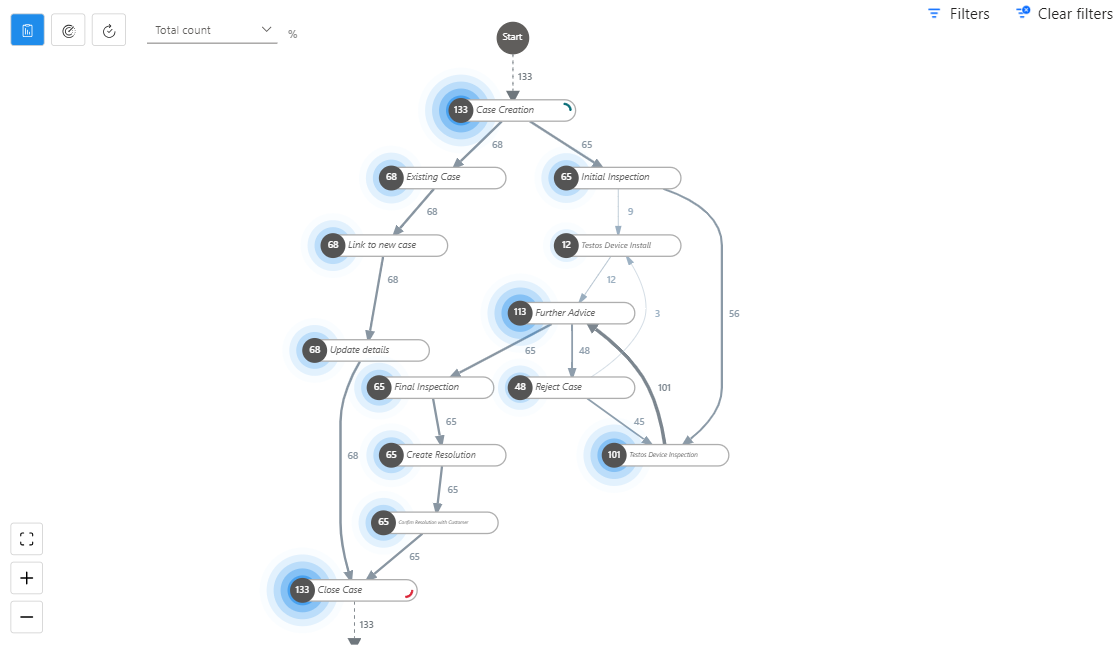
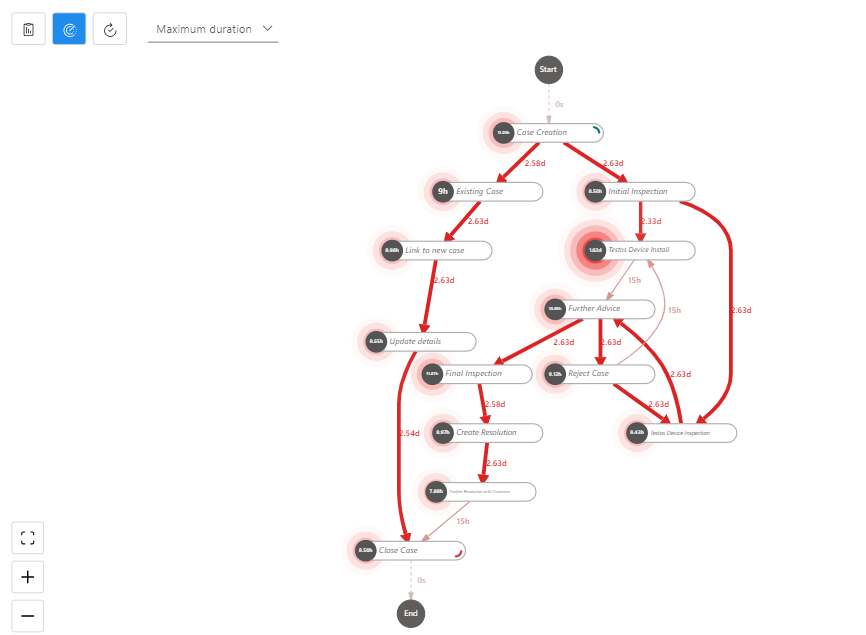
Process Map: This feature could be used to represent the sequence of tasks for identifying, reporting, and addressing mould and damp problems in housing units. It could be customised with filters and time metrics to focus on specific tasks or timeframes.
Statistics: This would provide a statistical overview of the mould and damp issues across different units. For instance, it could generate summary charts and reports on the frequency of issues, their severity, or the time taken to address them.
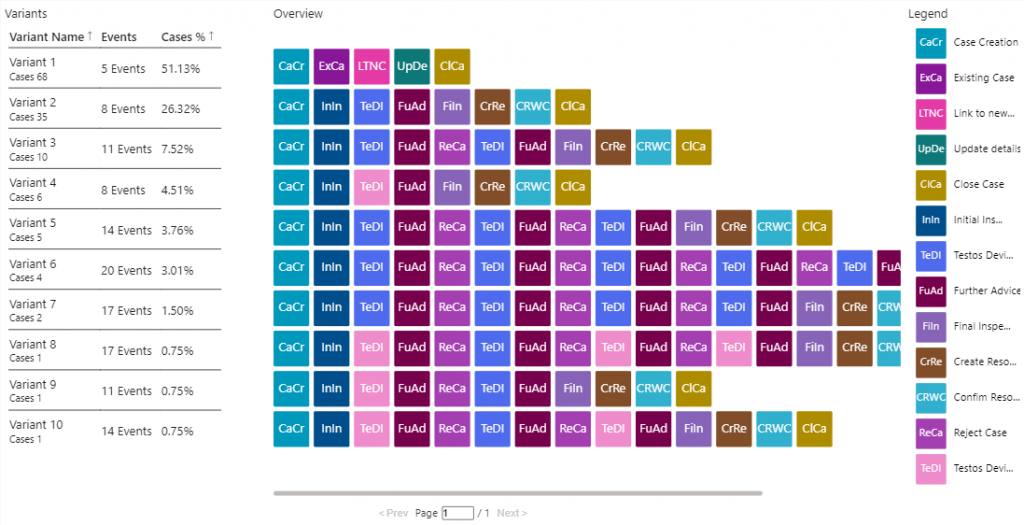
Variant DNA: This feature could provide a visual overview of different approaches to dealing with mould and damp problems. For example, there may be different ways of identifying and addressing these issues, and this feature could help in visualising and understanding those variants.
Process Comparison: This could be used to compare the effectiveness of different mould and damp solutions. For instance, if multiple approaches or contractors are used to address these issues, this feature could compare their success rates and costs.
Root Cause Analysis: This would be used to identify the underlying causes of repeated mould and damp issues. For instance, if certain units or buildings have recurring problems, this feature could identify the differences between those cases and ones where the problems are successfully addressed.
Filtering: This would allow the housing association to focus on specific parts of the mould and damp process. For instance, if they wanted to examine the effectiveness of a specific mould treatment without considering other factors, this feature could be used to filter out irrelevant data.
Custom Metrics: This could be used to define custom metrics for evaluating the mould and damp process. For example, a metric could be created to calculate a cost-efficiency score based on the cost of remediation, the time taken, and the success rate.
Business Rules: This could be used to define and evaluate KPIs for the mould and damp process. For example, a rule might be that issues should be addressed within a certain timeframe, or that the recurrence rate for mould and damp problems should be below a certain threshold.
Process Mining is a data-driven approach that leverages event logs to extract knowledge from business processes. It aims to discover, monitor, and improve real-world processes by analysing data from various sources. In recent years, Process Mining has gained increasing attention in the field of Customer Experience (CX), where it can help to identify pain points and bottlenecks in customer processes.
In this blog post, we will explore how Process Mining can be applied to customer processes, and what benefits it can provide.
What is a customer process?
A customer process is a sequence of activities that a customer performs to achieve a specific goal. For example, when a customer wants to buy a product, they might browse an online store, select a product, add it to the shopping cart, enter their payment details, and confirm the order. This sequence of activities constitutes a customer process.
Why is customer process important?
Customer processes are crucial for the success of a business, as they directly impact customer satisfaction, retention, and loyalty. A well-designed customer process can lead to a positive customer experience, which in turn can increase customer engagement and revenue. On the other hand, a poorly designed customer process can result in frustration, confusion, and even loss of business.
How can Process Mining help improve customer processes?
Process Mining can help improve customer processes in several ways:
Identify bottlenecks and inefficiencies: By analyzing event logs, Process Mining can identify bottlenecks and inefficiencies in customer processes. For example, it can show which steps take the longest time, which steps are repeated most often, and which steps have the highest error rate. This information can help to prioritize areas for improvement.
Visualize the customer journey: Process Mining can create visual representations of customer journeys, showing how customers navigate through different touchpoints and channels. This visualization can help to identify gaps and inconsistencies in the customer experience.
Measure and monitor KPIs: Process Mining can measure and monitor key performance indicators (KPIs) related to customer processes, such as the time to complete a process, the conversion rate, and the customer satisfaction score. By tracking these KPIs, it is possible to evaluate the impact of process improvements.
Predict and prevent issues: Process Mining can identify patterns and anomalies in customer processes, which can be used to predict and prevent issues before they occur. For example, if a particular customer behavior is associated with a high likelihood of churn, it can be flagged and addressed proactively.
Optimize the customer experience: By improving customer processes, Process Mining can optimize the overall customer experience, leading to increased satisfaction, loyalty, and revenue.
What are the steps involved in applying Process Mining to customer processes?
The steps involved in applying Process Mining to customer processes are as follows:
Data collection: Collect data from various sources, such as CRM systems, web analytics tools, and customer feedback platforms. The data should include event logs that capture the sequence of activities performed by customers.
Preprocessing: Clean and preprocess the data, removing noise, outliers, and irrelevant variables. The data should be transformed into a format that is suitable for Process Mining.
Process discovery: Use Process Mining techniques to discover the customer process model from the event logs. This model should represent the most common paths followed by customers, and should capture the variations and exceptions in the process.
Process analysis: Analyze the process model to identify bottlenecks, inefficiencies, and opportunities for improvement. Use visualizations, KPIs, and predictive analytics to gain insights into the customer journey.
Process optimization: Use the insights gained from the analysis to redesign and optimize the customer process. Test the new process in a controlled environment, and measure the impact on KPIs.
Continuous monitoring: Monitor the customer process regularly to ensure that it remains effective and efficient. Use Process Mining to detect any new issues or anomalies that may arise, and take corrective action as needed.
Iterative improvement: Use the insights gained from continuous monitoring to further optimize the customer process. This is an iterative process that should be repeated periodically to ensure that the process remains aligned with customer needs and expectations.
What are the benefits of using Process Mining for customer processes?
Improved customer experience: By identifying and addressing bottlenecks and inefficiencies, Process Mining can improve the overall customer experience. This can lead to increased satisfaction, loyalty, and revenue.
Data-driven decision making: Process Mining provides a data-driven approach to process improvement, enabling organizations to make informed decisions based on objective insights.
Increased efficiency: By optimizing the customer process, Process Mining can increase efficiency and reduce costs. This can lead to higher profits and a competitive advantage.
Proactive issue prevention: Process Mining can help organizations to predict and prevent issues before they occur. This can help to minimize the impact on customers and reduce the risk of churn.
Continuous improvement: Process Mining enables organizations to continuously monitor and improve their customer processes, ensuring that they remain effective and aligned with customer needs and expectations.
In conclusion, Process Mining is a powerful tool for improving customer processes. By providing objective insights into the customer journey, it can help organizations to identify and address bottlenecks, inefficiencies, and opportunities for improvement. This can lead to a better customer experience, increased efficiency, and higher profits. However, the field of Process Mining is constantly evolving, and there are always new technologies and tools emerging. Therefore, we suggest that readers stay tuned for our upcoming blog on Power Automate process advisor. This technology can democratize process mining for businesses using or thinking about implementing the power platform, making it even more accessible and beneficial for organizations of all sizes. With the right tools and techniques, businesses can achieve a competitive advantage by improving their customer processes and delivering an exceptional customer experience.