
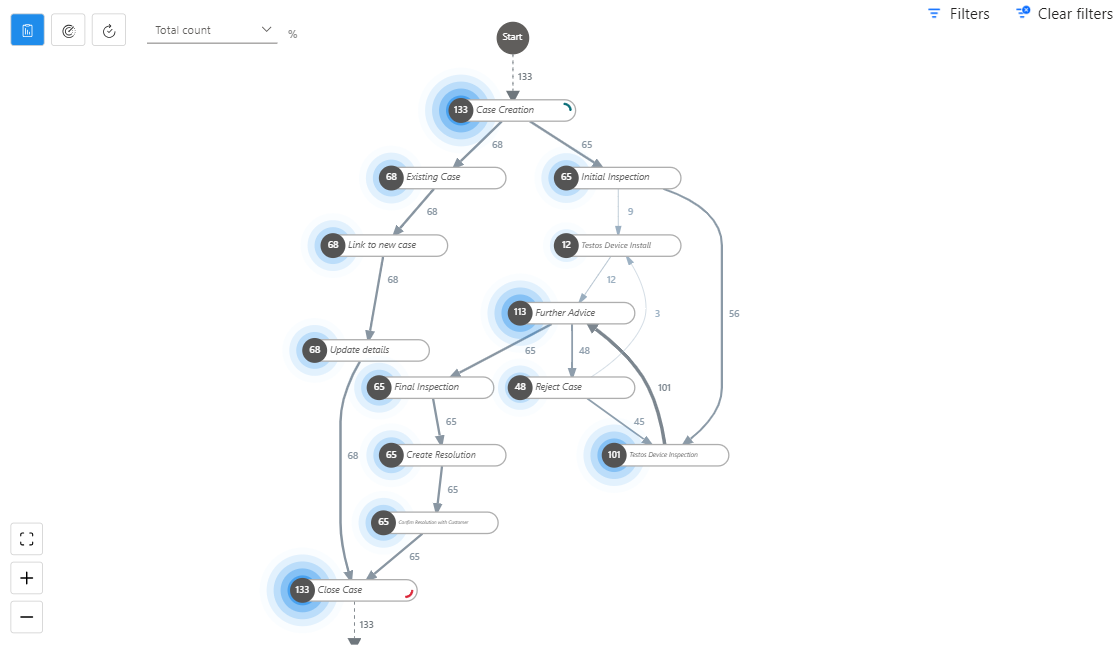
The evolving landscape of property management has seen digital tools revolutionize various operational procedures. Among these digital innovations is the Microsoft Power Automate Process Mining desktop app. Tailor-made to dissect, analyse, and offer improvement strategies for any process-oriented operation, this technology finds a significant application in the mould and damp processes managed by housing associations. In this blog post, we delve into how each feature of this powerful tool can be used to enhance efficiency, identify issues, and help make data-driven decisions in handling mould and damp problems within housing units. Let’s explore each feature in more detail.
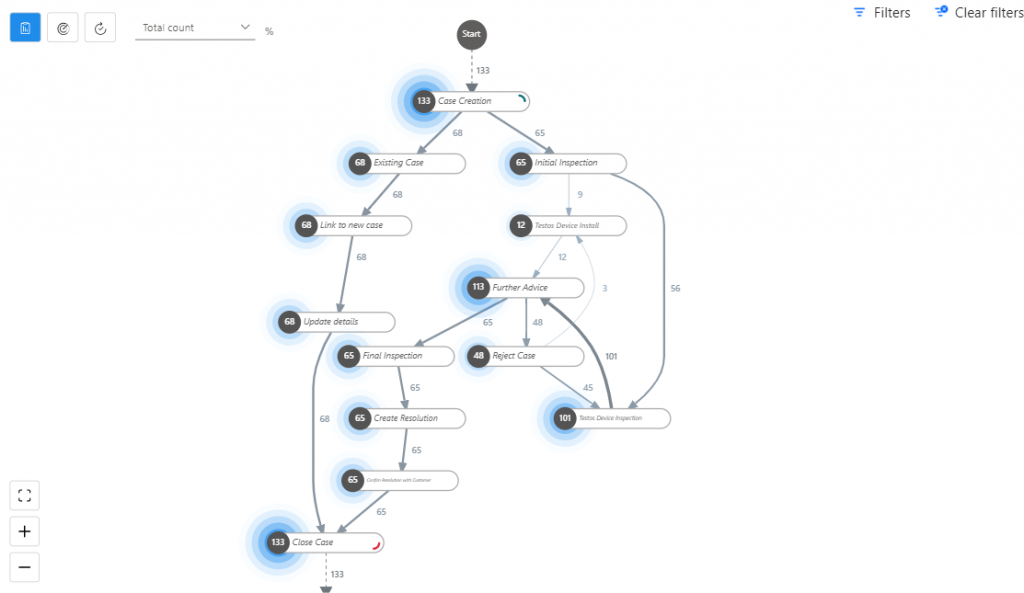
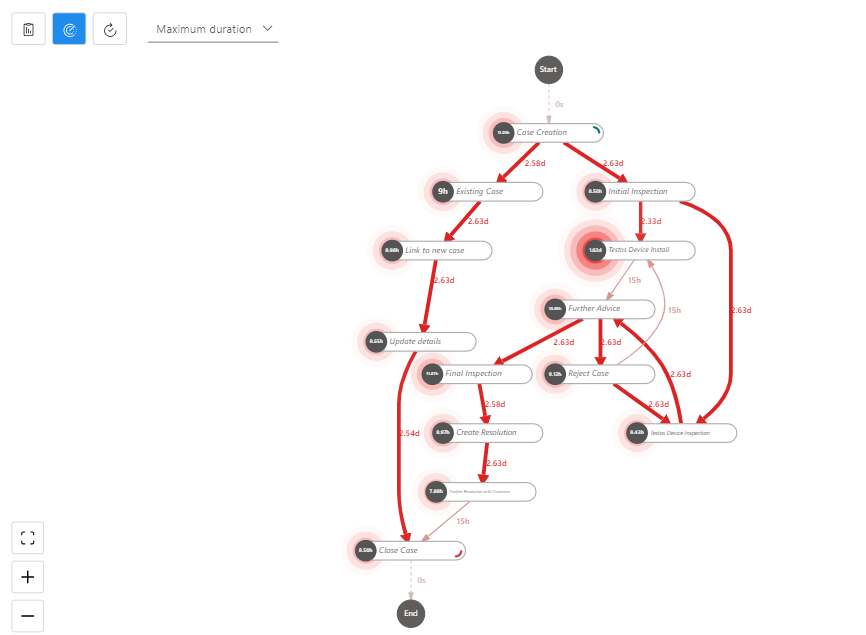
- Process Map: This feature could be used to represent the sequence of tasks for identifying, reporting, and addressing mould and damp problems in housing units. It could be customised with filters and time metrics to focus on specific tasks or timeframes.
- Statistics: This would provide a statistical overview of the mould and damp issues across different units. For instance, it could generate summary charts and reports on the frequency of issues, their severity, or the time taken to address them.
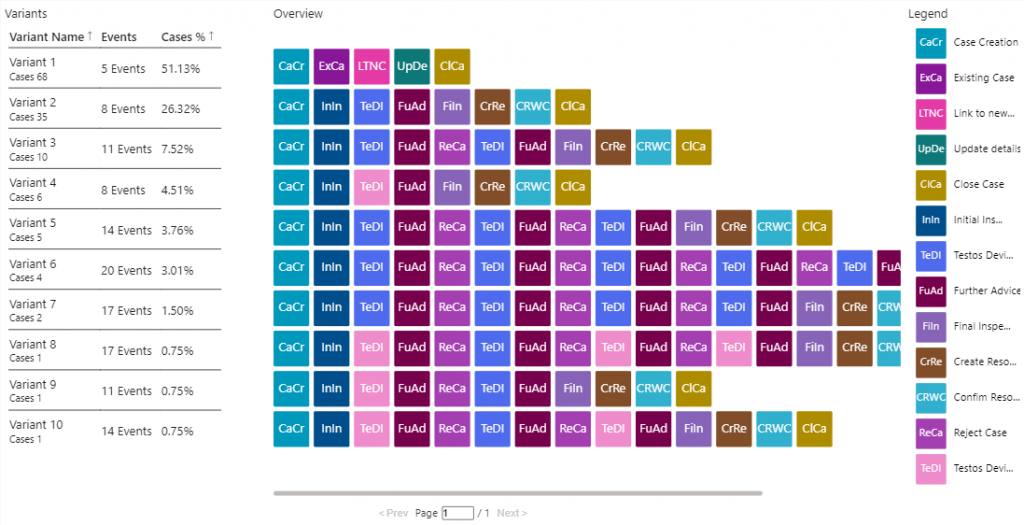
- Variant DNA: This feature could provide a visual overview of different approaches to dealing with mould and damp problems. For example, there may be different ways of identifying and addressing these issues, and this feature could help in visualising and understanding those variants.
- Process Comparison: This could be used to compare the effectiveness of different mould and damp solutions. For instance, if multiple approaches or contractors are used to address these issues, this feature could compare their success rates and costs.
- Root Cause Analysis: This would be used to identify the underlying causes of repeated mould and damp issues. For instance, if certain units or buildings have recurring problems, this feature could identify the differences between those cases and ones where the problems are successfully addressed.
- Filtering: This would allow the housing association to focus on specific parts of the mould and damp process. For instance, if they wanted to examine the effectiveness of a specific mould treatment without considering other factors, this feature could be used to filter out irrelevant data.
- Custom Metrics: This could be used to define custom metrics for evaluating the mould and damp process. For example, a metric could be created to calculate a cost-efficiency score based on the cost of remediation, the time taken, and the success rate.
- Business Rules: This could be used to define and evaluate KPIs for the mould and damp process. For example, a rule might be that issues should be addressed within a certain timeframe, or that the recurrence rate for mould and damp problems should be below a certain threshold.
More Blogs to come specifically around Process Mining using power Automate